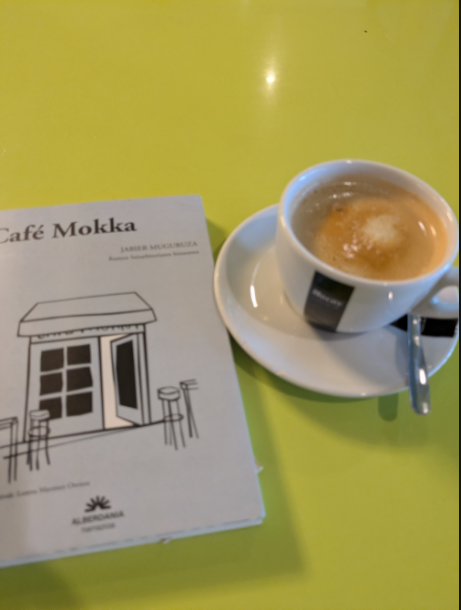
Café Mokka – Jabier Muguruza
Ikusi baita ere: euskaraz
Euskaraz, en castellano (más abajo) & in English (below).
Iritzi guztietan ez gara ados egongo, noski, baina egungo gaiei buruz hausnartzeko irrika sortuko dizu.
No coincidiremos en todas las opiniones, pero el libro te dará la oportunidad de pensar en los temas más actuales.
Although not agreeing with all his ideas, this book will definitely give you plenty to think about.
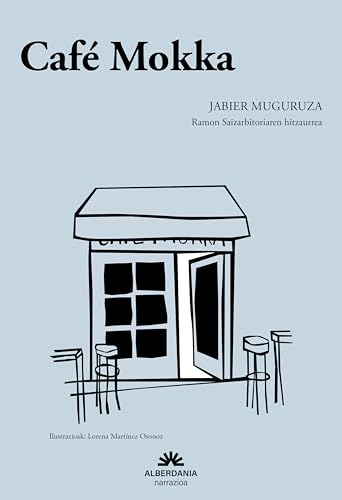
Title/Izenburu: Café Mokka
First published: April, 2026
Lehen argitalpen data: 2026ko apirila
Lenght/luzera:170 pages/orrialde
Publisher/Argitaletxea: Alberdania
(euskaraz)
Eskerrak eman nahi dizkiot Erandioko Altzagako udal liburutegiari, bertako nobedade atalean topatu bainuen liburu hau eta kuriositatea sortu zidan.
Narrazio laburren estruktura mantendu barik, kapituku bakoitzean egungo gai bati buruz erreflexio egiteko ideia paregabea aurkezten du Jabier Muguruzak kasu honetan: tabernari baten haurnasketak dira, kafetegian entzuten dituen elkarrizketei buelta bat ematen dielarik: feminismoa, musikaren industria, jazz-a, euskara giroa, FOMOa, egungo bizitza azkarra, egungo haurren heziketa, e.a. kritikatzen ditu. Bai, denetarik topatuko duzu hemen!
Nahiz eta hitz gutxitan (kapitulu oso laburrak dira), gaiak nahiko jorratzen ditu gero zuk erreflexioa buka dezazun.
Iritzi guztietan ez gara ados egongo, noski, ideia batzuekin adibidez guztiz talka egiten dut, baina pentsatzeko aukera emango dizu.
Idazkera aldetik, buruan duena paperean soltatzen duela dirudi. Hortaz, «tira», «alajaina» eta hitz egitean erabiltzen diren interjekzio ugari topatuko ditugu. Honek interakzioari freskotasuna ematen dio, narratibaren berezko seriotasun-kutsua ezabatuz.
Hausnarketa prozesu horren ondorioz, askotan ildoa ere galtzen du eta, gu pentsamenduan galtzen garenean moduan, behin eta berriz hitz egiten ari zen gaira bueltatu behar du. Kasu askotan, se le va la pinza eta «hau lehen esan dut» bezalakoak erabiltzen ditu. Gehiegitan, nire ustez; horiek irakurtzea apur bat nekagarria eta gogaikarria iruditu zait. Bi aukera ditu idazleak: ez hori esan edo ez dadila hainbeste errepikatu.
Gaiak oso gaurkotuak dira. Ez ditu gehiegi garatzen, eta filosofo eta pentsalari askoren aipamen ugari erabiltzen ditu. Baliabide horrek ere pixka bat nekatu egin nau, batzuetan gai delikatu baten aurrean bere iritzia eman gura ez eta kanpoko iritzietara jotzen duela ematen baitu. Horregatik, kapitulu batzuk beste pertsona batzuen ideien remix modukoak direla ematen du.
Oro har, nobela laburra da, baina ez espero nuena bezain arina, gaiek elkarrizketan sarrarazteko eta hausnarketara bultzatzeko duten gaitasunagatik. Deskonektatzeko momentua behar baduzu, utzi liburu hau beste baterako. Baina gaur egungo gaietan sakontzera bultzatzen zaituen liburu baten bila bazabiltza, emaiozu aukera bat eta gero idatzi beheko komentarioetan zer iruditu zaizun.
(Castellano)
Me gustaría dar las gracias a la Biblioteca Municipal de Altzaga Erandio: encontré este libro en su sección de novedades y me entró la curiosidad.
Sin mantener la estructura de los relatos cortos (que suelen ser independientes), en este caso, Jabier Muguruza presenta en cada capítulo algún tema de actualidad sobre el cual reflexiona. El protagonista es un camarero con una mente curiosa que se atreve a dar una vuelta a las conversaciones que escucha en su cafetería: feminismo, industria musical, jazz, euskera, el FOMO, el ritmo acelerado de la vida actual, la educación de los niños y niñas de hoy, etc. ¡Sí, aquí encontrarás un poco de todo!
Aunque lo haga en pocas palabras (son capítulos de pocas páginas), desarrolla los temas lo suficiente para que después seas tú quien termine la reflexión. Por supuesto, no coincidiremos en todas las opiniones; el camino que toman algunas de sus ideas, por ejemplo, me parecen disparatadas (aunque nunca deja su opinión del todo marcada o cerrada). Aún así, el libro te dará la oportunidad de pensar en ello.
En cuanto a la escritura, parece que vuelque sobre el papel lo que le viene a la cabeza. Así, encontramos muchas interjecciones del habla común, lo que aporta frescura a la interacción y elimina ese toque de seriedad propio de la narrativa leída sobre papel.
En contrapartida, como consecuencia del propio proceso de reflexión, a menudo también pierde el hilo y, como nos pasa cuando nos perdemos en nuestros propios pensamientos, tiene que volver a retomar el tema del que estaba hablando. Para ello, utiliza expresiones como «esto ya lo he dicho» o «como he dicho antes», recurso del que echa mano en demasiadas ocasiones para mi gusto. Leer este tipo de expresiones tan repetidas y manidas me ha resultado algo molesto. El escritor tiene dos opciones: no decirlo o no repetirse tanto.
Los temas, eso sí, son muy actuales. No están excesivamente desarrollados y utiliza muchas citas de personalidades filósofas y pensadoras (recurso que cansa también un pelín, porque parece que echa mano de opiniones externas para no mojarse en un tema delicado), por lo que algún capítulo da la sensación de remix de ideas de otras personas.
En general, es una novela corta, menos ligera de lo que esperaba debido a esa capacidad de integrarte en la conversación y empujarte a la reflexión. Si estás buscando desconectar, déjala para otro momento. Pero si quieres un libro que te empuje a ahondar en temas actuales, anímate a echarle un vistazo y me comentas qué te ha parecido.
(English)
I’d like to thank the Altzaga Municipal Library in Erandio because I came across this book in their new arrivals section, and it caught my attention.
Rather than following the usual structure of short stories, Jabier Muguruza uses each chapter to explore a different issue. This time, the thoughts belong to a café owner who reflects on the conversations he overhears at work about almost everything: feminism, the music industry, jazz, the Basque-speaking community, FOMO, the fast pace of modern life, the way children are raised nowadays, and so on. There’s a bit of everything in here!
Even though the chapters are very short, he manages to explore each topic enough to get you thinking. Of course, we’re not going to agree with everything he says. There are some ideas I completely disagree with, but this book definitely gives you plenty to think about.
As for the writing style, it feels as though he simply puts down on paper whatever is going through his head. So we get plenty of interjections you’d normally use in everyday speech. This gives the writing a certain freshness and takes away some of the seriousness you might associate with written narrative.
This writing approach also means that he sometimes loses his train of thought and, just like when we get lost in our own thoughts, he has to go back to what he was talking about. So, he often uses expressions like «I’ve already said this» – a bit too often, in my opinion–, and I found it somewhat irritating.
The topics, though, are very much up to date. They aren’t explored in great depth, and the book makes frequent use of quotes from philosophers and other thinkers. That gets a little tiring too, because at times it feels like he turns to other people’s opinions not to take a clear stance on sensitive subjects. As a result, some chapters end up feeling a bit like a remix of other people’s ideas.
Overall, it’s a short novel, but bit as light as I expected, mainly because of how easily it draws you to thinking. If you’re looking for something to relax and not think too much, maybe save it for another time. But if you want a book that encourages you to dig deeper into current issues, give it a try and let me know what you think in comments.
Aipamen nabarmenak (kontuz spoilerrekin) — egin klik erakusteko
- (…) gero errealitatea dator mailuarekun eta zure tokian jartzen zaitu, ederki jarri ere (15. orr.).
- Irakurri izan dut goizean jaikitzea ez dela gizakiak bizitza honetan hartu beharreko erabaki zailenetako (…) (25. orr.).
- Jende askorentzat, igandetako melankolia existitzen bada, dena itxita dagoelako izaten da (56-57. orr.).
- Gainera, berak defendatzen duenez, oso ongi omen dago dena ez ulertzea. Tira, puntu hori ere ez dakit ondo ulertzen dudan… (62. orr.).
- «Ez maitemindu zure sufrimenduaz!» (122. orr., Slavoj Žižek-i erreferentzia eginez).
- Eta, bueno, horrekin nahikoa ez, eta gizakiaren «ez jakiteko grina»-z ere entzun izan diet (…) (127. orr.).
- (…) baina orain, seme-alabak bladintzatzeko beldurez, uko egiten zaio eragiteari, eta neska-mutilak orientaziorik gabe uzten dituzte bizitan. (135. orr.).
Puntuazioa/Puntuación/Rating: ★★★⯪☆